
Pharma Heat Exchangers

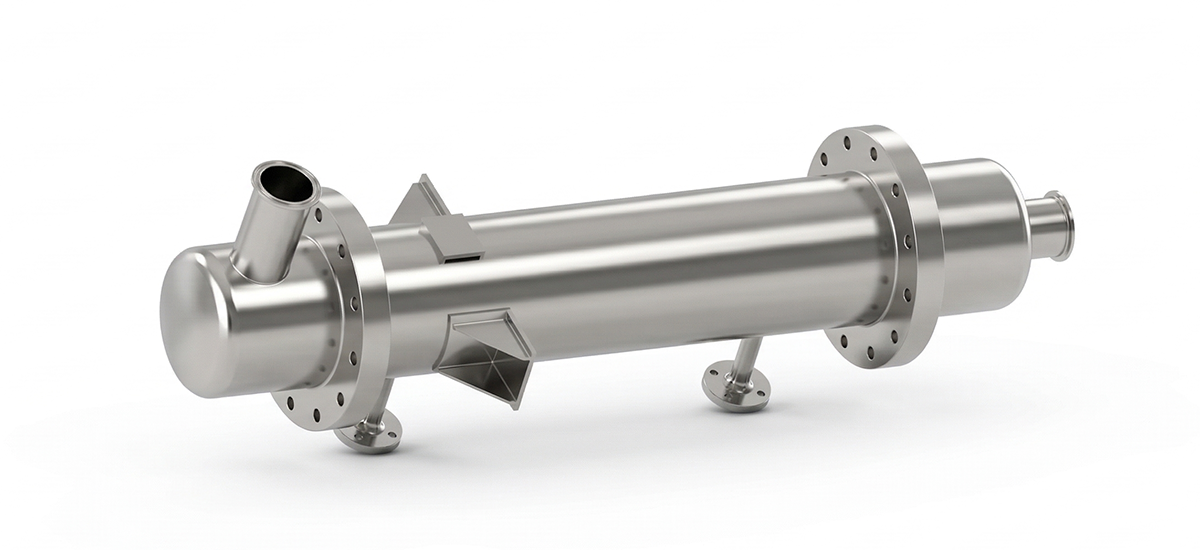
Heat exchangers allow for the transfer of thermal energy between two fluids without direct contact, ensuring precise temperature control within industrial processes. In pharmaceutical, biotechnological, and cosmetic facilities, these pieces of equipment play a key role in operations where thermal stability is critical for product quality and process efficiency.

Its integration into process systems allows for controlled heating or cooling of fluids, ensuring suitable conditions for stages such as product preparation, sterilization, or utility control.
Exchangers Farm 

Heat exchangers allow for the transfer of thermal energy between two fluids without direct contact, ensuring precise temperature control within industrial processes. In pharmaceutical, biotechnological, and cosmetic facilities, these pieces of equipment play a key role in operations where thermal stability is critical for product quality and process efficiency.

Its integration into process systems allows for controlled heating or cooling of fluids, ensuring suitable conditions for stages such as product preparation, sterilization, or utility control.

Technology and design

Design adapted to the thermal needs of the process
Stainless steel manufacturing for pharmaceutical environments
Integration with process, utility, and control systems
Configuration for heating or cooling fluids
CIP Integration and Pharmaceutical Water Systems
Instrumentation for temperature, pressure, and flow

Productive versatility

Thermal control of manufacturing processes
They allow stable temperatures to be maintained during mixing, preparation, or product treatment operations, avoiding variations that could affect the quality or stability of the formulations.
Process utilities heating and cooling
They are used in purified water, steam, or other plant services to adjust the temperature of utilities before their use in process equipment.
Cleaning and sterilization processes
Integrated into CIP or SIP systems, they allow controlling the temperature of cleaning solutions or process circuits during washing or sterilization phases.
Heat treatments in industrial processes
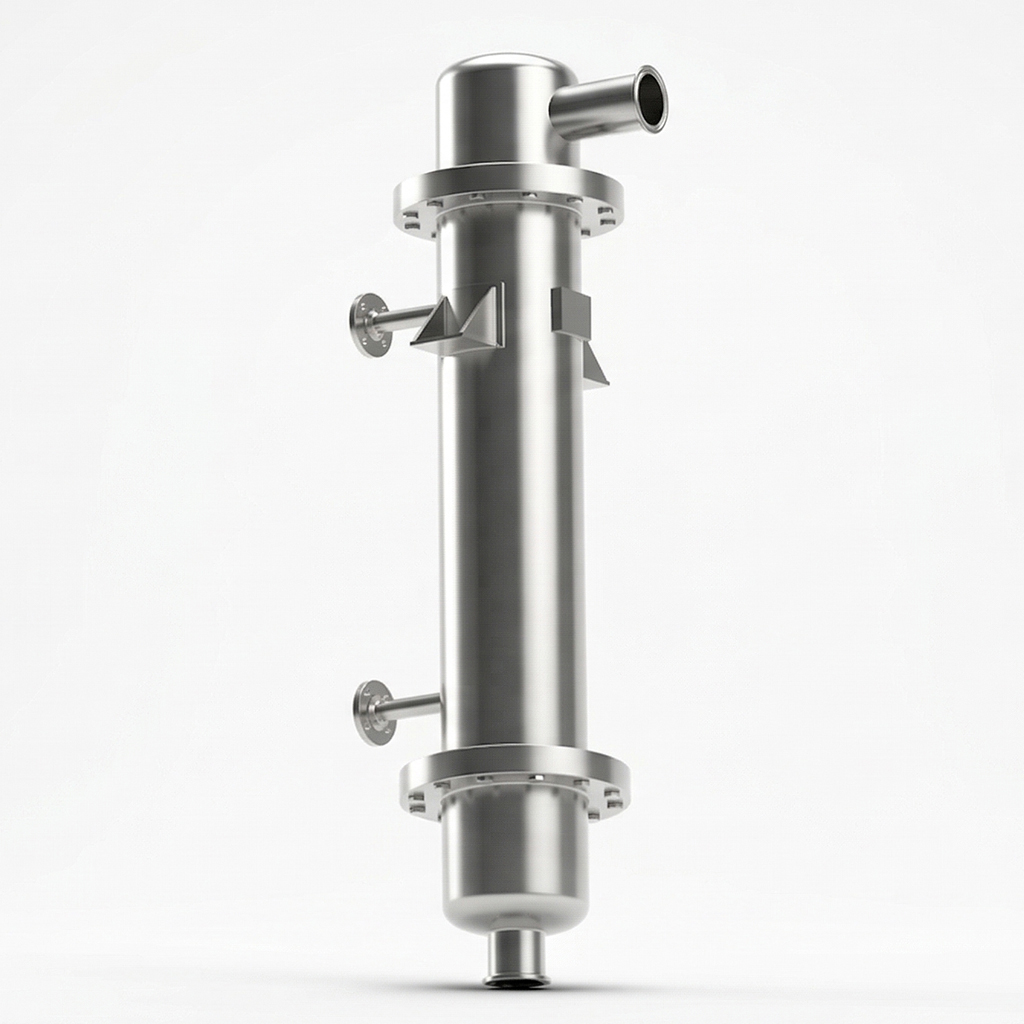
Applicable in operations where the product or process fluids require controlled heating or cooling to maintain appropriate operating conditions.

Key solutions and benefits

Precise temperature control in the process
They allow for controlled adjustment and maintenance of fluid temperatures.
Non-contact heat transfer between fluids
They guarantee separation between circuits, avoiding cross-contamination.
Thermal stability in critical process stages
They maintain constant thermal conditions during operation.
Integration into utilities and process systems
They can work within water, steam, or process fluid circuits.
Optimization of energy consumption in the process
They facilitate the efficient use of thermal energy.
Adaptation to the thermal behavior of the process
They are sized according to flow rate, temperature, and fluid characteristics.

Applications

Pharmaceutical sector

Thermal Control of Pharmaceutical Solutions
Heating and cooling of formulations
Temperature regulation in mixing processes
Thermal Control in CIP and SIP Systems
Bulk product conditioning“
Temperature control in pharmaceutical utilities

Biotechnology sector

Thermal control of culture media
Temperature Regulation in Buffer Solutions
Thermal conditioning in cell culture
Thermal control of biological solutions
Heat exchange in biotechnological utilities
Temperature regulation in fermentation processes

Cosmetics industry

Thermal control of cosmetic emulsions
Temperature regulation in gels and lotions
Thermal conditioning of cosmetic bases
Thermal control in mixing processes
Thermal adjustment in personal care products
Temperature regulation in cosmetic manufacturing

Veterinary sector

Thermal control of veterinary solutions
Temperature regulation in suspensions
Thermal conditioning before packaging
Thermal control in antiseptic solutions
Temperature Regulation in Veterinary Mixtures
Temperature control in animal hygiene